While many of us might think of prayer as quiet time spent with our heads bowed and hands clasped, it can look very different for each of us.
“There is no right way to pray…when it comes to prayer, there’s so much possibility,” says the Rev. Roger Owens, author and professor of Christian spirituality and ministry.
Adults can lead the way in exploring a variety of prayer practices as they help young people find out what brings them closer to God. It’s a lifelong lesson that all families should learn together.
Open up the conversation
“Parents can feel like they're not confident enough in their own prayer life, [thinking], ‘Who am I to talk to my kids about prayer?’ But it should be the most natural thing for families, guardians and parents to be able to talk with each other and with their kids about life with God, prayer and their spiritual lives,” says Owens.
Owens’ latest book, Praying Their Way, helps families do just that. It includes conversation starters so that prayer moves from something that feels private and perhaps difficult to discuss to something fun for everyone to discover.
“I think what [adults] are going to find is that these are meaningful practices and ideas about prayer they can talk about for themselves, not just for their kids. And [it will] increase confidence so that conversations and praying together can happen more freely and naturally.
“The best way to help the faith development of kids is to make sure that the adults around them are growing in their faith and feeling equipped,” he observes.
About the book
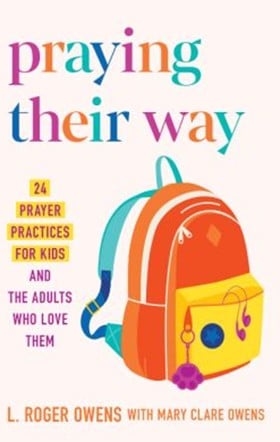
Inspired by time spent in prayer with his kids and answering their curious questions, Owens saw the need for an accessible, practical resource for parents that could pave the way for meaningful faith conversations.
So that adults feel supported, Praying Their Way includes scripts, step-by-step guides, variation suggestions and ways to practice alone or with a group.
While the book is focused on preteens, the content can easily be adapted to younger and older children. It’s perfect for families, youth or children’s ministry leaders, and anyone who spends time with young people. It’s available from Upper Room Books.
Be adventurous
The book suggests 24 prayer practices, which are sorted into the categories of Scripture, silence, body, nature, together and justice. Owens says, “I think if you ask a lot of kids in 5th or 6th or 7th grade, ‘What's prayer?,’ they'll say, ‘Talking to God.’ I think the goal of this book is to give a really holistic, varied approach, also knowing that everyone's different.
“Some folks are going to find one way that really works, and some are going to enter into it another way. Some are going to be more physical, and some are going to be really happy with the wordy stuff. Because all kids are different, [we need to] create the widest possible approaches to entering in. I seriously doubt that any kid's going do all 24 of these practices and say, ‘They're all for me.’”
Trying the practices can be lifechanging for kids and teens as they discover what helps them feel God’s presence. Owens suggests beginning each practice imagining that God is delighting in you and is smiling at you. Here are some ideas to explore:
- Read Scripture: Unpack a Scripture passage, spend time figuring out what it is about and what it means, listen to what God might be saying to you and experience God’s presence.
- Get physical: Pray the Lord’s prayer using gestures.
- Bathe in light: Picture someone or something that you are concerned about. Then picture them bathed in God’s light. Imagine God’s healing on them and entrust them to God’s care.
- Give a morning offering: First thing in the morning, sit with your hands in a bowl shape and think about what your day will hold. Imagine placing those things in the bowl and then lift it to God.
- Engage in justice: Think of different ways to pray for social justice, climate justice or other advocacy needs in your community. Do research, discuss the issue with others, pray about how you can assist and then engage in fulfilling needs.
“It's a wide palette that allows both adults and kids to enter into a lot of different doors and experiment. See what works, what feels natural,” Owens explains.
Honor kids’ voices
As you explore prayer practices with the young people in your life, create a safe, nonjudgmental space for reflection and conversation so that relationships can be strengthened as well.
Owens wrote Praying Their Way with his young teenage daughter, Mary Clare, who was integral in ensuring the book would resonate with others in her stage of life. She contributed personal reflections and experiences throughout.
“I thought it was really important to have a kid’s voice in this, that perspective of actually doing a prayer practice and saying, ‘Here’s what I did, here’s what it was like and why it was meaningful to me.’ That was beautiful for me to be able to hear from her heart about what it means for her to experience the fact that God is here,” Owens shares.
Laura Buchanan works for UMC.org at United Methodist Communications. Contact her by email.
This story was published on February 3, 2026.


