
The United Methodist Church in the Philippines continues to stand in solidarity with Indigenous peoples as they struggle to defend their rights, protect their ancestral lands, and uphold human dignity.
Support for the Aetas
Aetas are Indigenous groups in the Philippines that live in scattered, isolated mountainous parts of Luzon. They are among the earliest known inhabitants of the Philippines, and they work to preserve early culture and traditions. Their ancestral lands allow them to practice sustainable agriculture and protect nature.
The United Methodist Church attended Aeta Day 2026, a gathering that united advocates and organizations in the continuing defense of ancestral lands amid persistent militarization, land grabbing, and other threats to land and resources.
“The United Methodist Church has a long history of condemning all forms of exploitation and colonization, from the period of colonialism to its current forms through globalization led by powerful nations,” shared Bishop Ruby-Nell M. Estrella.
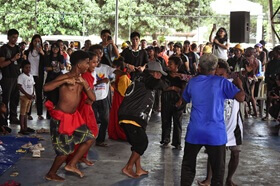
Cultural activities, such as dance, storytelling, and solidarity messages, were presented as expressions of resistance and defense of ancestral lands. These activities also celebrate and preserve culture, traditions, and a deeply rooted connection to nature.
Justin Salas, event attendee and United Methodist youth leader, gained a deeper appreciation for and understanding of the richness of Aeta culture and traditions. Inspired to join the movement, he said, “Witnessing their various performances taught me the value of preserving the heritage they have cultivated over generations. I learned the importance of being a voice for the Aeta.”
Defending ancestral lands and communities
For Indigenous communities, the struggle is not only about land but also about rights, safety, livelihoods, and the future. These are the very things Aeta Day was organized to resist.
Rev. Glofie Baluntong, executive director of the Philippines Regional Conference (PRC) Board of Church and Society, shared concerns raised by the leader of the Aeta Mansaway group regarding government agencies. These organizations are expected to protect Indigenous peoples but may instead become instruments through which ancestral lands are placed at risk of seizure by individuals and companies with land interests.
There are also concerns about the proposed Pax Silica AI data center hub and its potential effects on Indigenous communities and the environment. Many questions remain about whether such a development would benefit the communities whose ancestral lands may be affected, as well as possible displacement.
Sheena Camille Calma-Sanchez of the Board of Women’s Work-PRC has seen companies promise compliance and cooperation with government agencies, but the technological and economic advancement did not necessarily address what Indigenous communities needed.
Living and loving like Jesus: Beyond tokenism
Solidarity with Indigenous peoples cannot be limited to cultural celebrations, traditional dances, clothing, or gift-giving. Standing in solidarity strengthens connections and deepens understanding of social action and the Social Principles of The UMC.
Church members are encouraged to remain critical, participate in discussions that demonstrate care, and amplify the voices of marginalized communities affected by relocation.
Bishop Estrella called upon the Church to deepen its commitment by upholding the rights of Indigenous peoples, protecting the sovereignty of the country, remaining aware of workers’ rights, and conserving and preserving the environment.
The UMC remains committed to building a just and life-giving community where the dignity, knowledge, and capabilities of Indigenous peoples are affirmed, respected, and recognized as vital to the flourishing of the community and all creation.
Larren Jo Basillo and Jhoanna Kylle Ragasa work for United Methodist Communications and UMC TV in the Philippines.
This story was published on September 3, 2026. The contact is Laura Buchanan.


