
“Jonah’s three nights in the belly of the whale feel like an invitation to transformation. It’s the place where he prayed, where he reconnected with God, where he gained clarity and strength to be who it was that God called him to be,” says the Rev. Sharon Seyfarth Garner, a United Methodist spiritual director and founding director of Belly of the Whale Spiritual Direction & Retreat Ministries.
The biblical story of Jonah has been inspiring Seyfarth Garner for more than thirty-five years. She shares, “He’s a character that I am like…kind of imperfect, fumbling about, getting it right sometimes, getting it wrong sometimes. He is a spiritual companion for me.”
Pray like a WHALE
Seyfarth Garner points out that the four chapters of the book of Jonah contain deep teaching, and each has a theme:
- Chapter one: How to wake up to God’s presence
- Chapter two: How to pray honestly
- Chapter three: How, and where, to act
- Chapter four: How to love extravagantly
The themes have become a handy reminder. When Seyfarth Garner feels out of balance, she prays like a W.H.A.L.E.: Wake up, pray Honestly, take Action, and Love Extravagantly.
Dive deeper
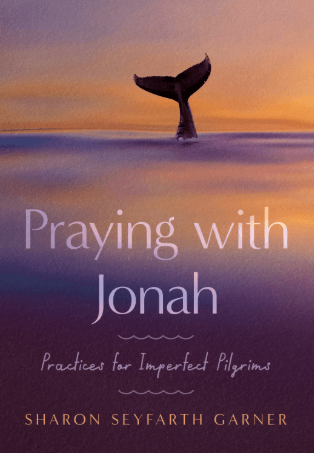
Praying With Jonah: Practices for Imperfect Pilgrims is a practical blend of Bible study on the reluctant pilgrim Jonah and fresh creative prayer practices to help us slow down, reflect, and listen for God’s call in our lives. It is a useful resource for both individuals and small groups who are seeking to rediscover God’s sacred rhythms woven into everyday life. It is published by Upper Room Books.
“My invitation to people is to be ‘baleen.’ A baleen whale feeds using a huge filter in its mouth. It takes in a mouthful of seawater, then filters out what it doesn’t need and holds on to what feeds it. My hope is that as people read this book, they will be ‘baleen’ - that they will take it all in, filter out what they don’t need, and hold on to the practices that feed them,” says Seyfarth Garner.

Pictured above: A baleen whale’s filter
Find balance between stillness and action
“We have to be still enough so that we can stay centered in God's presence and bold enough to go,” Seyfarth Garner observes. “The word ‘enough’ feels like an invitation to balance, as opposed to a push towards being endlessly prayerful or endlessly active. It invites a conversation with God [about] what is enough.
“I think our society pushes us to err on the side of productivity. How do we then slow down to pull back from this cultural tsunami that's just pulling us to do, do, do, do, do? But the term ‘slowing down’ is also a little tricky because slowing down is not just about our body being still, it's about trying to release the worries and the distractions that fill us when we are busy.”
Slowing down is about learning how to be attentive to God in the midst of the doing. - The Rev. Sharon Seyfarth Garner
“When we are doing what we're called to do, how can we do that from a place of less worry and distraction? Each person has to find their own rhythm. There's not a particular right or wrong way to find that balance,” she says.
Prayer practices support our journey
Seyfarth Garner’s book, Praying with Jonah: Practices for Imperfect Pilgrims, includes a wide variety of prayer practices that readers can try as they seek to connect with God as they move throughout their day. Seyfarth Garner encourages, “Start small, with something you enjoy. Instead of feeling that you have to do something daily, my invitation is to do something more often than not.”
Here are some ideas to consider:
- Sacred sauntering: Take a walk and imagine yourself having an intentional conversation with someone who can help you discern where it is that God is calling you. This could be a family member, mentor, or friend. Seyfarth Garner imagines she is walking with Jonah and Jesus.
- Sit for one minute: Set a timer and simply rest for sixty seconds. If your mind tends to wander, try counting or listening to birdsong. Sixty-second videos are available on Belly of the Whale’s Facebook page to assist you in this practice.
- Color mandalas: Take time to relax, reflect, and enjoy making art. Free, printable coloring pages are available online. You can also pick up Seyfarth Garner's book, Praying with Mandalas, to explore the deeper contemplative aspects of this practice.
- Whale spout journaling: Like a whale creating a spout by exhaling from his blowhole, take time to write down and release whatever is in your heart. Then pause, pray for the new things that God has for you, breathe in, and write about those insights.
- Pilgrim’s pocket prayer journal: Create a notebook full of inspiration that can accompany you on your spiritual journey. This might include Scripture verses, quotes, poems, drawings, images, and reflections. Turn to this source of hope when you need to be encouraged.
We’re all on our own pilgrimage
A pilgrimage doesn’t have to involve travel. Rather, it can be a helpful metaphor for our unique, lifelong spiritual trek. Seyfarth Garner suggests, “It is setting off on a journey with some intention and trusting that God will be with you every step of the way.
“Not everyone walks at the same pace, not everyone chooses the same path. There's also an invitation to travel light, as best we can, to leave behind all that baggage and just sort of travel into the moment with God's presence.
“There's no perfect way to be a pilgrim. We're all imperfect pilgrims. We're all just journeying as best we can, each doing it our own way.”
Laura Buchanan works for UMC.org at United Methodist Communications. Contact her by email.
This story was published on July 8, 2026.


