
For many families, walking into a church carries risk. Not because they do not want to be there, but because experience has taught them they may not be understood. For families of neurodivergent children, that risk often becomes reality. Spaces can feel overwhelming. Expectations can feel rigid. Too often, the message is clear without being spoken. This place is not built for you.
At Crestwood United Methodist Church, that assumption is being quietly dismantled. Through sensory-friendly open gyms, movie days, and a growing commitment to learning, leaders and volunteers are creating space for families to show up as they are. That work is being shaped by people like Rev. Derek Robinette, Jenna Tackett, Jessica Bradley, and dedicated lay leaders including Ely Sanneman, and Julia Pennington and family, all of whom have helped bring this ministry to life.
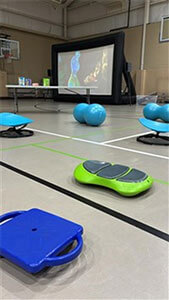
Children Find Safety/Parents Finds Rest
They are not only creating space. They are learning how to sustain it. As part of that commitment, Ely Sanneman and Children’s Minister Jessica Bradley have begun leading community education events like “Loving Your Neurodivergent Neighbor.” These gatherings help the church and the wider community better understand how to create environments of belonging, not just accommodation. That learning is already shaping what happens in the room.
One mother arrived at an open gym carrying more than just the needs of her child. She carried the weight of past church hurt, the constant demands of caregiving, and the uncertainty of whether this space would be any different. Her son, who is non-verbal and often overwhelmed in public settings, needed time.
He paced in the quiet room, made loud noises, and moved in his own rhythm. No one tried to stop him or asked for an explanation. He was acknowledged, welcomed, and given space to be himself. After a while, he stepped into the gym and stayed for an hour and a half. For this family, that was not a small thing. Outings usually lasted twenty minutes before everything became too much. “They’ve had no place to go,” his mother shared, holding back tears. Here, they found one.
Impact Reaches Beyond Church Walls
The impact is reaching beyond those who attend. In a local restaurant, someone recognized Ely and asked a direct question. “Is this real? Are you truly that accepting?” The answer was yes. Not just in words, but in practice. He spoke about someone in his life who might need a place like this, even though faith had been a difficult subject. The invitation was simple. Come as you are. You will be safe. You will be welcomed. Trust like that builds slowly, but it begins with consistency between what is said and what is experienced.
During a sensory-friendly movie day, another family decided to try. A young mother arrived with two children, one of whom is on the spectrum, along with grandparents who had long been part of the church. Supporting their grandson had meant stepping away from much of church life. Participation had become complicated and often impossible. At first, they stayed close to the edges, ready to step out if needed. Instead, they were told no apologies were necessary and no explanations were required. Before the movie ended, the children were running and laughing across the gym, fully at ease. For the first time in a long time, the adults sat down and rested while their children played freely. They could all relax while the kids played, something that had not felt possible before. What looked like a simple moment carried deep meaning.
Another caregiver nearly stayed home. Exhaustion made that the easier choice. But her son saw photos of the setup. Snacks. A movie. Spinny chairs. “Mom, my rule is we’ve got to go.” So they did. He played with other children and engaged in ways that felt natural to him, and his mother experienced something rare. She was not alone in carrying everything.
These moments are not accidental. They are the result of people who have chosen to pay attention, to learn, and to create space with intention. This is how discipleship takes shape, not in theory but in lived response. It grows when people experience belonging before anything is asked of them, and when communities reflect the grace they have received in the way they welcome others.
At Crestwood, that work is already bearing fruit. Families who once felt isolated are finding connection. Caregivers are discovering they are not alone. A church is becoming a place where belonging comes first, and because of that, hope is beginning to take root in new ways.
They are only getting started.
Your Generosity Helps Others
By supporting your local congregation’s outreach ministries, you impact lives of your surrounding communities and those around the world. No matter what part of the world we live in, your generosity can reach across oceans and help churches like Crestwood United Methodist help families and children feel safe and welcomed.
story by Jenna Tackett, Communications/Administration and Upward Director Kentucky Annual Conference
This story represents how United Methodist local churches through their Annual Conferences are living as Vital Congregations. The overarching purpose of The United Methodist Church is to "make disciples of Jesus Christ for the transformation of the world." A vital congregation is one that is effectively engaged in this mission. Together, we become a powerful force for healing, growth, and transformation—living out the Gospel in every corner of the globe.


