
News Archives


Nebraska Annual Conference
June 14-17, Kearney, Neb.

The Nebraska United Methodist Conference passed legislation June 15 approving “The Comprehensive Proposal for Change” with only about 10 dissenting votes. The proposal focuses on lay and clergy leadership development that will lead to improved evangelism efforts that will grow both existing and new churches.

With the mission statement of “Making Disciples, Making a Difference” the plan sets out a new vision, core values and the key components for accountability for both lay and clergy persons.

The most talked about component of the proposal is the move to six districts in 2007. Every current district will see change as 2007 approaches. The district lines change will enable the current district superintendents to hire full-time assistants rather than the half-time office staff they currently have. By reducing the number of districts, the conference is able to shift resources from the two eliminated offices to the other six to enable district superintendents to act as coaches to clergy and lay leadership, as well as delegate office-oriented administrative tasks to their assistants who, as full-time staff, will now have time to do.

On other legislation:

Conference members also set Minimum Base Compensation Guidelines for 2007. Minimum salary for local pastors (FL) for 2007 is $30,649; for associate members $32,569; probationary member $34,010; and full member $35,920. Guidelines were also set for professional expense, vacation time, continuing education, course of study leave, office expense, and medical insurance. These figures can be found in the conference workbook on pages 33-34.

The Board of Pension and Health Benefits Recommendations for 2007 were accepted by the conference. The new pension plan (Clergy Retirement Security Program) goes into effect January 2007.

Resolutions on urging the government to close Guantanamo Bay; urging our members of the Congress to commit an additional ONE percent of the federal budget to development and humanitarian assistance by 2010; declaring August, 2006 as “Buy Fresh, Local and Fair Trade Month;” urging Nebraska churches to raise $1 per church member for the Advance Special Global AIDS Fund; and an Anti-Gambling Resolution were all passed by the conference.

A resolution dealing with the severe alcohol abuse in White Clay, Neb. was referred to the Native American Committee for further study. A resolution “To Declare Opposition to Judicial Council Ruling 1032 Regarding Discrimination in Receiving Members into the United Methodist Congregations” was referred to the Conference Board of Christian Social Witness.

The resolution to “Support the United Methodist Global AIDS Fund (Advance Special #982345) was amended and affirmed with local churches urged to contribute $1 per church member for the fund.

Marcia McFee presented on worship design, David Lowes-Watson on small group formation, and Bishop Fritz Mutti on the global AIDS crisis. The University of What Works featured local pastors showcasing successful programs working in their own respective churches.

Worship was a highlight of the conference with Marcia McFee working closing with the Nebraska United Methodist Conference worship committee. The celebration of the 50th anniversary of full clergy rights for women on was particularly memorable.

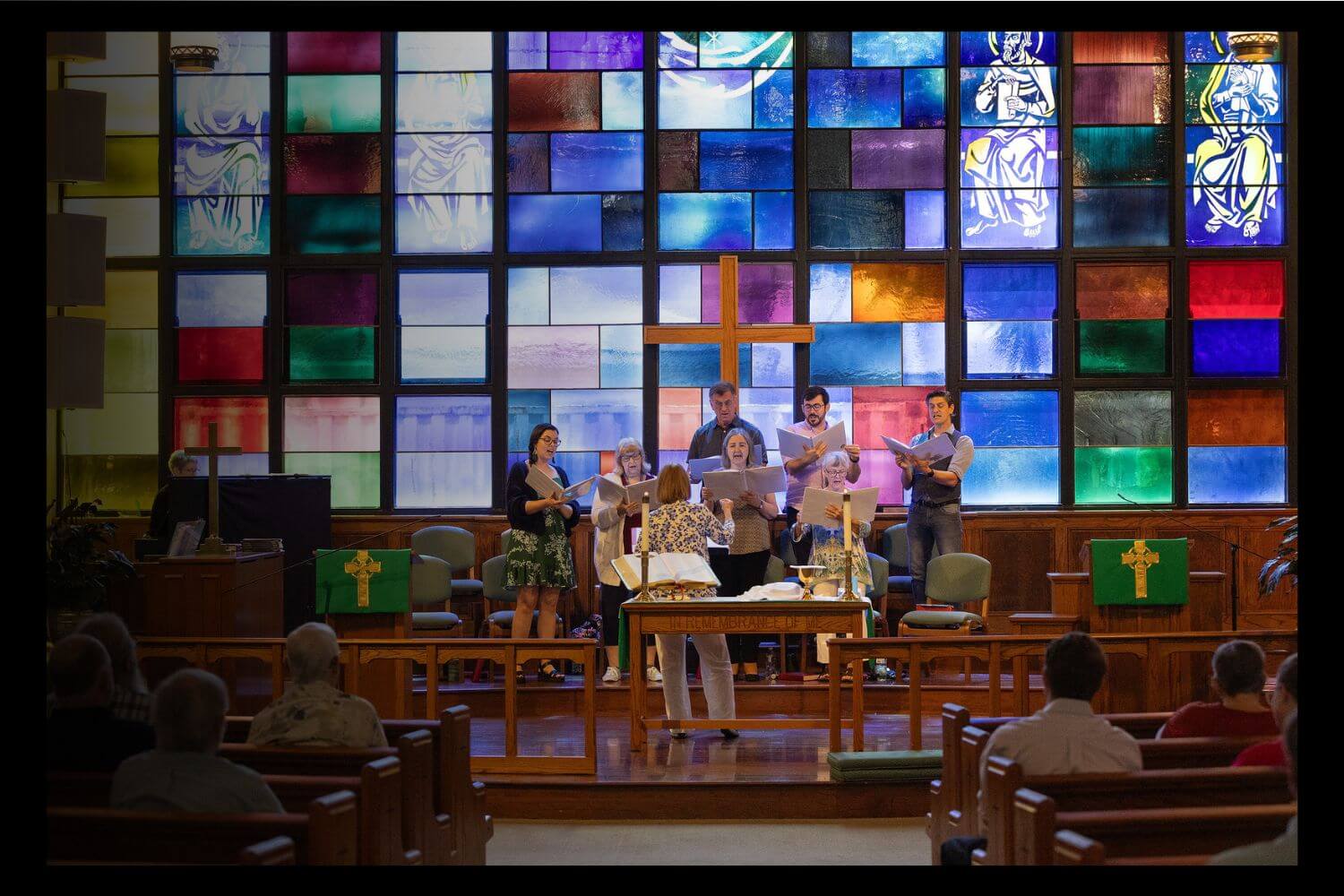
The celebration started with a rush of wind as a storm overtook the convention center. Jokingly someone says, “When this many clergy women get together the winds blow!” Then spontaneous hymn-singing worship began in the dark, as we waited for the power to return. It set the tone for what was a powerful worship.

Different women shared parts of their faith stories. There were stories that honored God’s faithfulness, telling of the women in their lives who were mentors, examples and encouragers that God gave to them in support of their ministries. Each story shared was an example of the extensive and rich heritage of women as clergy.

The worship service was enhanced with visual video of women in ministry and with singing and dancing as an expression of worship.

Bishop Susan Hassinger gave the worship message. She began by explaining that there are 12,000 ordained women in the United Methodist Church and that one out of every four churches is served by a woman. Hassinger went on to convey the rich heritage of women who went before us, beginning with Miriam of the Old Testament, and on to Mary Magdalene (Apostle to the Apostles), Phoebe, Prisca, and others. She reminded us of other women in history: women in Wesley’s era to whom Wesley gave his own recommendation.

Anna Howard Shaw the first women to attend a seminary school, and Amanda Barry Smith who was born into slavery and against odds like racism and sexism continued to be a faithful servant of the Lord. Bishop Hassinger praised women that were willing to step out when called and she also reminded us of times when promises were pulled back. She is currently bishop-in-residence at the Boston University School of Theology. She also is a spiritual director, retreat leader and conflict transformation consultant. She believes that Christian faith and practice includes both social and personal holiness.

Bishop Hassinger’s challenge for us today: Where is God calling you to step out?

Gregory Reed and Daniel Spearow were ordained as elders. Those retiring included:

The Rev. Ralph Ford, the Rev. Michael McMurtry, the Rev. Janis Soule, the Rev. J.C. Browne; the Rev. Rosalie Anders, the Rev. Peter M Change, the Rev. K. Lowell Gaither and the Rev. Edwin Morrison.